Time it takes: one evening, or five short sittings spread over a couple of weeks. “What money questions should we ask before moving in together?” is one of the few money questions people search for while they are happy, which is exactly the right time to answer it. The lease is not signed and no bill has a story attached to it yet. This guide walks through the five conversations to have before you share an address, how to have them without either of you feeling audited, and what to write down so you never have to have the same one twice.
Quick answer: what money questions should you ask before moving in together?
Before you share an address, share five things: what each of you earns, what each of you owes, how you will split the shared costs, what you are each saving for, and who pays what on which day. Take one topic per sitting, write the answers on one page at the end, and revisit that page after your first full month in the new place.
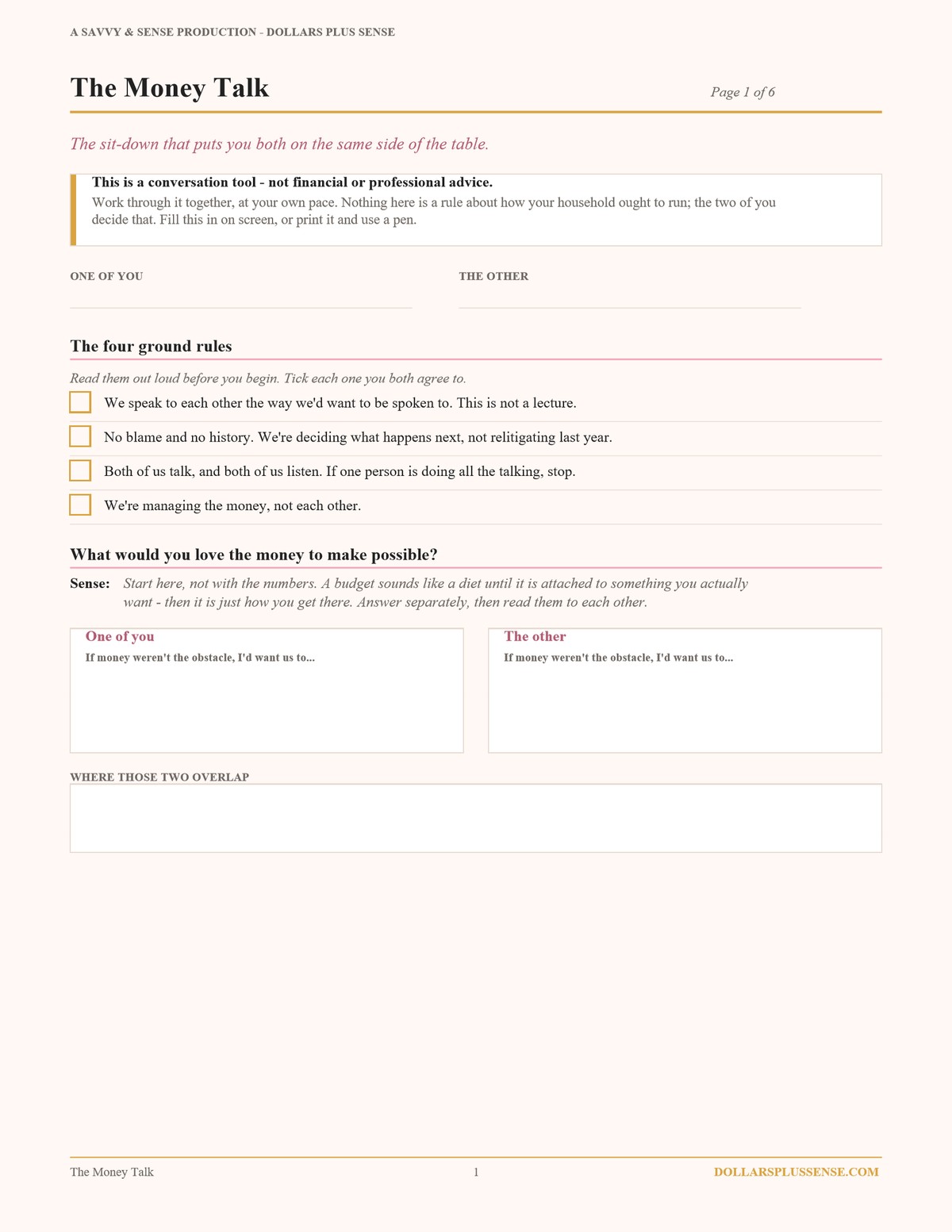
If you would rather have the evening already laid out, The Money Talk is that sit-down as a six-page fillable workbook and an interactive app: four ground rules, the goals you share and the ones you each keep, what the house needs, what each of you needs, and a one-page agreement you both sign.
Jump Ahead To:
Why is this easier before the lease than after the first late bill?
Sense here, and I will say the practical thing first: right now you are two people with two separate sets of money, deciding how one household will run. Every question is still a planning question. The moment you move in, the same questions become about something that already happened. Who covered the deposit. Whose name the electricity went under. Why the grocery number looked the way it did in week three. A planning question has an answer; a question about last month has a story, and the story is where these conversations go sideways.
The founder of this shop spent close to thirty years as a company CFO, and she will tell you that no partnership she ever watched work well began with one partner not knowing what the other one owed. Not because anyone was hiding anything, but because the first surprise always lands in the worst month. Two people sharing a lease are a small partnership. You get to set it up on purpose.
Savvy would like me to add the upside, because there is a big one. Two incomes under one roof, with the rent and the internet shared, is the largest raise most people in their twenties and thirties will ever get. Done on purpose, that gap becomes the trip, the emergency fund or the down payment. Done by accident, it disappears into the fog of two people who each assume the other is handling it.
What are the five money conversations to have before moving in together?
Take them in order; each one makes the next easier. Starter questions sit under each, and the only rule is that both of you answer every one.
- What do we each earn? Not the number you say at parties; the amount that actually lands in the account, and how often. Starter questions: What comes in each month after taxes and deductions? Is it the same every month, or does it move with hours, tips, commission or freelance work? Is any of it already spoken for before it arrives?
- What do we each owe? Every balance, in plain sight, with no commentary. A card, a car, a student loan, a phone on a payment plan, money owed to a parent. Starter questions: What is the full list, and what does each one cost every month just to stay current? Is there anything that has gone quiet that you have been meaning to look into? If either of you is not sure the list is complete, how to list every debt you owe in one place is the half-hour exercise that settles it, and the Money Reference Desk links to the one authorized place to pull a credit report for free.
- How will we split the shared costs? Rent, utilities, internet, groceries, the shared streaming logins, renter’s insurance, the furniture you are about to buy together. Starter questions: Equal halves, or in proportion to what each of us earns? What counts as shared and what stays personal? What happens to the split if one income changes for a few months?
- What are we each saving for? The goals you share, and the ones that belong to one of you alone. Both kinds count. Starter questions: What would each of us love the money to make possible in the next couple of years? Which of those are ours together, and which are mine or yours? What does each one roughly cost, and by when?
- Who pays what, and when? The logistics that turn the first four answers into a month that runs itself. Starter questions: Which bills come out of whose account, and on what day? Where does the shared money sit, and how does each person’s share get there? What do we do the month one of us is short?
That fifth conversation is the one people skip because it sounds boring, and it prevents nearly every argument the other four are supposed to prevent. A split that both of you agreed to but nobody scheduled is a late fee with good intentions. If many of the shared costs are yearly rather than monthly, the renter’s insurance, the car registration, the trip, a sinking fund budget is how two people set a little aside each month instead of being surprised together.
How do you have the money talk without it turning into an audit?
This is the part that decides whether the conversation happens once or every month for the rest of the lease. Four things make the difference, and none of them are about money.
Pick a decent moment. Not at ten at night, not right after a bill arrives, not in the car. A weekend morning with coffee, or a weeknight with dinner already handled.
One topic per sitting if you need it. All five in one evening works for some couples. For others, the second conversation deserves its own night and a day to breathe before the third. Five short talks beat one long one that ends badly.
Agree the ground rules out loud before you start. We speak to each other the way we would want to be spoken to. No blame and no history; we are deciding what happens next. Both of us talk, and both of us listen. We are managing the money, not each other. Saying them out loud feels silly for about ten seconds and then changes the whole tone of the evening.
Nobody audits the other person’s list. This is the rule that makes the fourth conversation survivable, and it is the one The Money Talk is built around. When you each write down what you want in the budget, the other person does not get to comment on the drive-through, the shoes, the golf or the subscriptions. You are deciding how much each of you gets, never what it is for. If a list needs trimming to fit, the person who wrote it decides what comes off. Once you both know that going in, the conversation stops being a negotiation and starts being a plan.
Savvy’s note on the fourth conversation, because she insists: the goals are what make the “no” worth saying. A budget that only ever subtracts will lose one of you quietly. Put a date on every goal you share. A goal without a date is a wish with a spreadsheet.
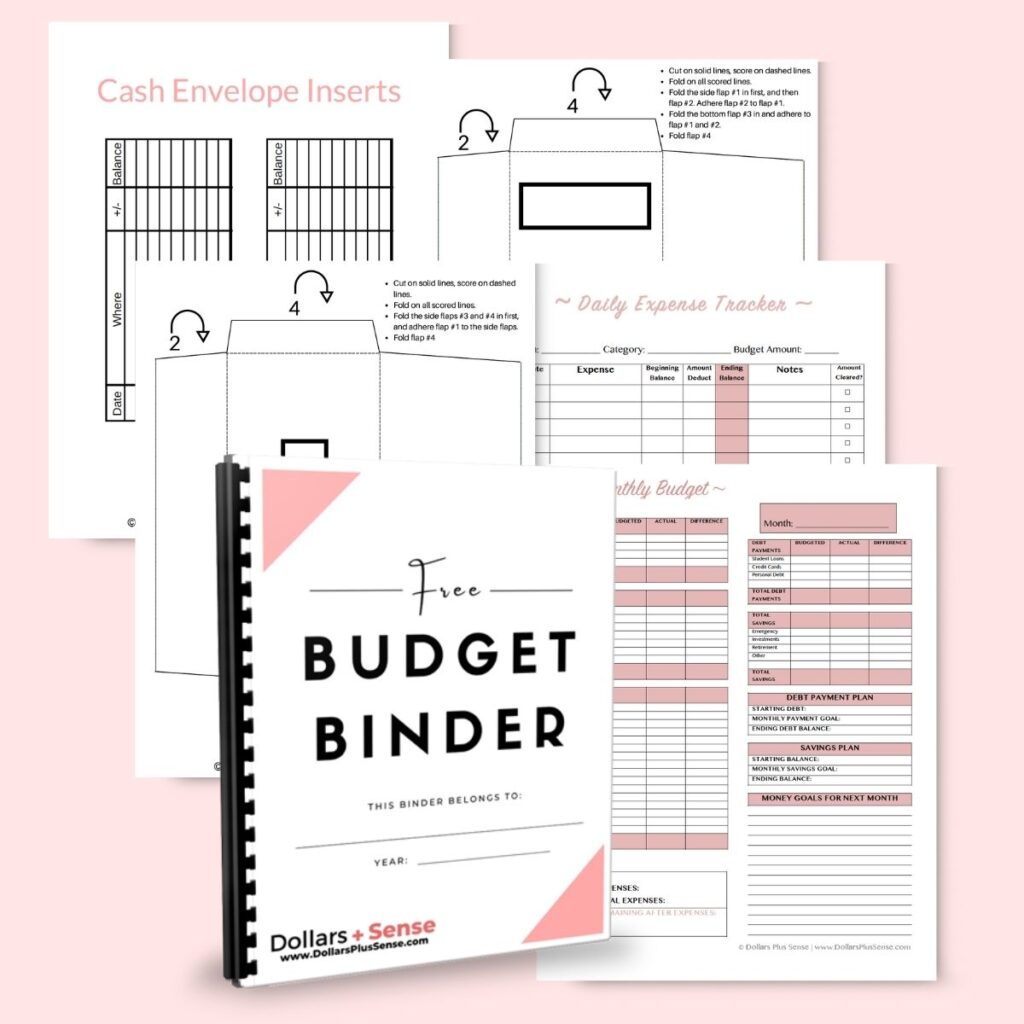
Want the pages the shared costs will live on? The free budget binder is a printable starter set: the monthly budget page, the bill tracker and a few of the pages we reach for most. Print one for the fridge in the new place, and the third conversation has somewhere to go.
What should you write down at the end?
One page. Not a spreadsheet with twelve tabs, not a shared document neither of you will open again. One page that says, in plain words, what the two of you agreed: the shared costs and how they are split, where the shared money sits and when each share goes in, the amount each of you keeps with no questions asked, the goals you are saving for and when, and the day each month you will sit down and check it. Both of you sign it. Then it goes somewhere you will both see it, inside a cabinet door, not in a folder.
Sense again, with the reason the page matters more than the conversation that produced it. Memory is a terrible accountant. Three months in, each of you will remember the agreement slightly differently, and both of you will be sincere. The page turns “I thought we said” into “here is what we said,” which is a much shorter conversation.
Where the day-to-day numbers live after that only has to be somewhere you will both open; budget binder vs spreadsheet vs app walks through which format tends to stick for which kind of person.
This page is not a legal document; who is on the lease and what happens to the deposit is a question for an attorney. And it is not a test of the relationship. Two people who disagree about money and talk about it are in far better shape than two who agree and never check.
When should you revisit the money talk?
Three times, and then on a rhythm. After the first full month in the new place, because the plan you made before moving in was a guess and now you have a real month to hold it against. Whenever either income changes: a raise, a new job, hours cut. And once a year around the lease renewal, when “do we still want to run it this way?” is a natural question.
In between, the standing meeting from the fifth conversation does the maintenance. Did the shared money arrive on time, did anything surprise us, is there a bill next month we should set aside for now. The 20-minute monthly budget review is the solo version of that check; for two people it is the same four passes with both of you at the table.
Frequently asked questions about money before moving in together
What if one of us earns much more than the other?
Then slow down on the third conversation. Splitting shared costs equally when incomes are far apart leaves the lower earner with almost nothing personal. Splitting in proportion to what each of you earns is the other common answer, and plenty of couples land in between. There is no right ratio, only the one you both said yes to out loud, and the equal personal amount each of you keeps is what makes it feel fair regardless of who earns what.
Do we need a joint account to move in together?
No. What you need is a clear answer to “where does the shared money sit and how does it get there.” For some couples that is one shared account the bills come out of, with each person moving their share in on payday. For others it is two separate accounts and a list of who pays which bill. Both work, and you can change your mind at the one-year check-in.
What if my partner does not want to talk about money?
Start smaller, and start with the fourth conversation instead of the first. “What would you love the money to make possible?” is a question almost anyone will answer, and the numbers are easier once you both know what the earning is for. Keep the first sitting short and let the numbers follow a week later. If money has become the place a much bigger worry is showing up, that is not a budgeting problem, and the kindest thing is to say so and find help together.
How often should we repeat the money talk?
The full five conversations three times: after the first month in the new place, whenever either income changes, and once a year around the lease renewal. In between, a short monthly check-in on a day you both already have in the calendar keeps the one-page agreement true.
Should we put any of this in writing legally?
The one-page agreement in this guide is a household plan, not a legal document. Whether you want something formal about the lease, the deposit or shared purchases depends on where you live, and that is a question for an attorney. Ask it before you sign, not after.
Ready to have the talk? Bring the evening already laid out.
The Money Talk is the five conversations from this guide as a guided sit-down: the ground rules, the goals you share and the ones you each keep, what the house needs, what each of you needs with the equal no-questions-asked amount built in, your standing meeting, and the one-page agreement you both sign. A six-page fillable workbook and an interactive app, one price, both formats.
It sits behind the Getting a grip door, with the rest of the tools for the stretch where two sets of money become one household.
Five conversations, one evening or five short ones, one page you both sign. It is the easiest version of this talk you will ever get to have, because nothing has gone wrong yet and nothing has to. Have it while it is still a plan.
General education, not investment advice.