Your annual bills aren’t surprises. They only feel surprising when they hit your account all at once.
A sinking fund budget helps you break big, expected costs into small monthly amounts. Instead of putting car insurance, holiday gifts, or professional dues on credit cards, you save for them ahead of time to cover predictable expenses and reduce overall financial stress.
You don’t need a perfect system. You need a clear list, real numbers, and a place for the money to go.
Jump Ahead To:
Key Takeaways
- A sinking fund is savings for a planned expense with a known purpose.
- Your emergency fund is strictly for unexpected expenses, whereas a sinking fund targets known future expenses that you can keep organized in a dedicated savings account.
- Use this formula: annual cost ÷ months until due date = monthly contribution.
- Check your bank statements, invoices, and renewal emails for accurate amounts and dates.
- Start with the bills that could cause the biggest money stress if they arrived tomorrow by setting up a reliable sinking fund today.
What a Sinking Fund Budget Is, and What It Isn’t
A sinking fund is money you save little by little for an expense you know is coming.
Maybe your insurance renews every six months. Maybe you are planning for future expenses like a professional membership or upcoming holiday gifts. Maybe you are setting aside cash for predictable expenses like planned car repairs. None of those costs are emergencies. They are predictable expenses that need a plan.
A sinking fund budget gives every one of those expenses its own category. You decide how much to set aside each payday or each month. When the bill comes, the money is waiting. By organizing your money into dedicated savings buckets, you can significantly lower your financial stress.
That is different from an emergency fund.
Your emergency fund is for unexpected expenses you did not plan for. Think a sudden job loss, an emergency vet visit, or a water heater that stops working. You don’t know exactly when those unexpected expenses will happen or what they will cost.
Your sinking funds are for expenses you can see on the calendar.
Using your emergency fund for annual bills can leave you short when a real emergency shows up.
You may see a sinking fund called “planned savings” or “expense funds.” The name doesn’t matter. The job does. The goal is to set aside money for one known expense over time, and the Sinking Fund Worksheet ($3) is the one-page version of exactly that: every fund, its due date, and this month’s deposit, on a single sheet.
Find the Annual Bills Hiding in Your Budget
Start with your real spending, not what you think you spend. Uncovering these hidden annual expenses is a foundational step in financial planning that protects your monthly cash flow.
Pull up the past three to six months of bank and credit card statements. Then look through your email for words like “renewal,” “annual,” “due,” and “premium.” Your calendar can help too.
Write down every bill that comes less often than monthly. Include the amount, the due date, and how often you pay it.
Your list may include:
- Car insurance premiums, registration, and maintenance
- Professional licenses, association dues, and work certifications
- Annual subscriptions, software renewals, and warehouse club memberships
- Holiday gifts, travel, and family celebrations
- Pet care, home maintenance, and property taxes
- Medical deductibles, glasses, or dental work you expect to need
Don’t forget expenses you pay quarterly or twice a year. A sinking fund can cover those too.
For example, if you pay insurance premiums every six months, you don’t have to call it an annual bill. You only need to save enough before the next payment date.
Costs and billing schedules vary. Your renewal date may change. Your premium may rise. Verify the amount and due date with your latest statement, policy document, or provider account before setting your target.
If you share expenses with a partner, decide what portion is yours. Your sinking fund only needs to cover your share.
Build Your Sinking Fund Budget With Simple Math
Here is the formula you will use again and again:
Annual cost ÷ months until due date = monthly contribution
If the bill is due in fewer than 12 months, use the number of months you have left. That makes your monthly amount more accurate and keeps your sinking fund on track.
Say your car insurance payment is $720 and it is due in six months:
$720 ÷ 6 = $120 per month
You would put $120 into your car insurance sinking fund each month.
Here is what that can look like when you map out annual expenses for your monthly budget:
| Expense | Total Cost | Months Until Due | Monthly Amount |
|---|---|---|---|
| Car insurance | $720 | 6 | $120 |
| Professional membership | $300 | 10 | $30 |
| Holiday gifts | $900 | 9 | $100 |
| Annual subscription | $120 | 4 | $30 |
The numbers don’t have to be complicated. They only need to be honest.
If you get paid twice a month, divide the monthly contribution in half. A $120 monthly target becomes $60 from each paycheck. If you get paid every other week, multiply the monthly amount by 12, then divide by 26 for a per-paycheck amount.
Use your actual paycheck schedule. The easier your sinking fund budget is to follow, the more likely you are to keep doing it and reach your financial goals.
A sinking fund also gives you a chance to question the bill itself. Maybe that $120 annual subscription no longer earns its place in your monthly budget. Maybe your professional dues are worth keeping because they support your career. You get to make those decisions before the charge lands.
Give Each Fund a Home
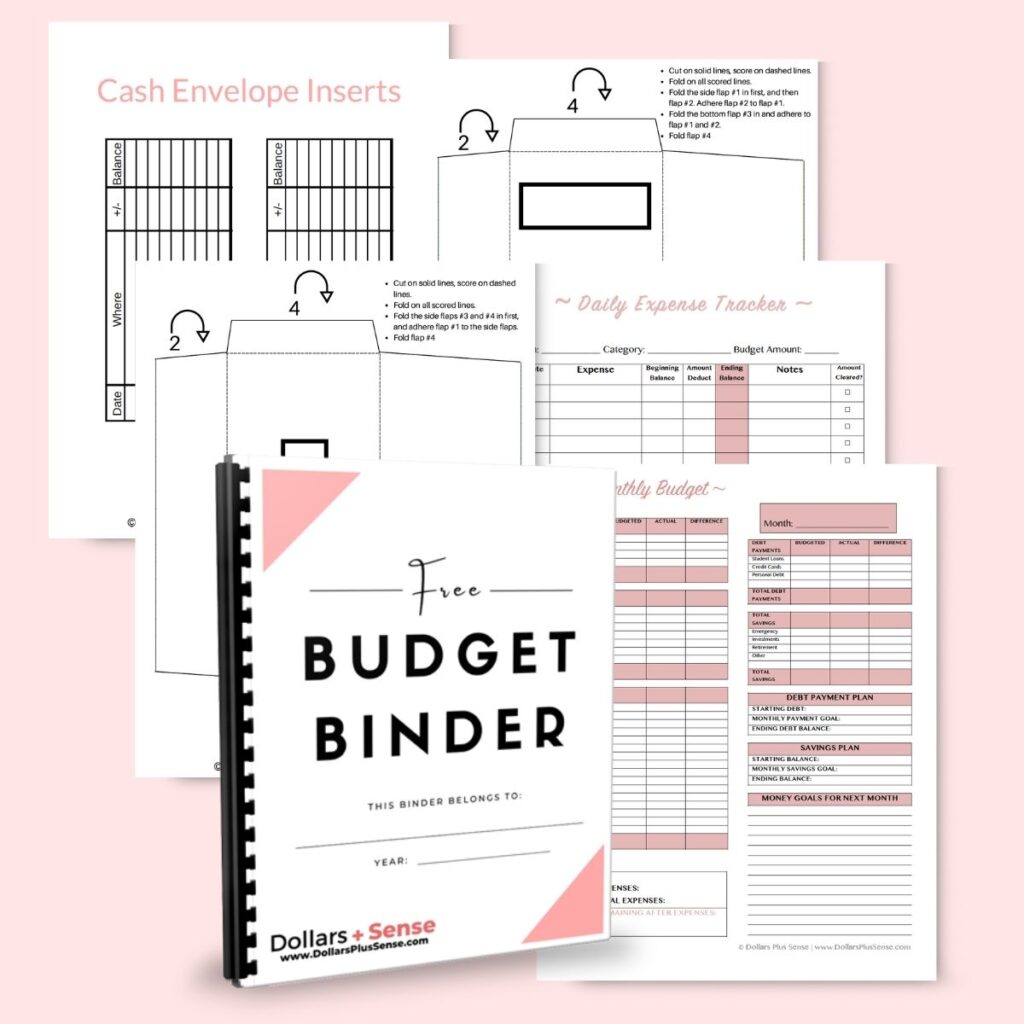
You can track your savings goals in a budget binder, spreadsheet, notes app, or budgeting app. A digital budget app is often the best option because you can easily check it on the go.
Some people keep all sinking fund money in one high-yield savings account and track each category on paper or in a spreadsheet. Others open a separate account or use labeled savings buckets inside a high-yield savings account. Another popular setup is utilizing sub-accounts within a high-yield savings account to separate your money. Either option can work.
The important part is that you don’t spend the money twice.
If your savings account balance is $2,000, but $900 is for holiday gifts and $720 is for insurance, your available extra savings is only $380. Your tracker shows you what each dollar is already assigned to do.
Add your monthly sinking fund contributions to your monthly budget right after fixed bills. To make this effortless, you can set up automatic transfers from your main checking account into a separate account. These automatic transfers ensure your savings goals get funded before you have a chance to spend the cash. Treat them like a bill you owe your future self.
A simple monthly budget may look like this:
| Budget Category | Monthly Amount |
|---|---|
| Rent and utilities | $1,850 |
| Groceries and gas | $650 |
| Debt payments | $400 |
| Emergency fund savings | $200 |
| Sinking funds | $280 |
| Fun and flexible spending | $320 |
A spending plan can include bills, savings, and guilt-free spending. Planned savings are one line in a broader spending plan, not a separate hobby.
You don’t need to choose between being responsible and enjoying your money. You need to know what your money has already been assigned to do.
What to Do When the Monthly Total Feels Too High
This is the part that can feel discouraging. You add up your sinking fund targets and realize you need $450 a month, which puts pressure on your monthly budget. Your current plan has room for $100.
Don’t quit the plan. Prioritize it to protect your cash flow.
Start with the expenses that have the nearest due date or the biggest consequence if you can’t pay. Critical needs like car repairs, insurance, taxes, and required work licenses may come before a vacation fund or optional subscription. Funding these essentials first prevents accumulating high-interest debt and keeps your long-term financial goals intact without causing unnecessary financial stress.
Then choose one of these moves:
- Lower the target if the expense is flexible. You may set a smaller holiday gift budget this year or choose a less expensive travel plan.
- Adjust the timeline. If a bill is due in two months, you may need to cut spending elsewhere for a short period.
- Use extra money with a purpose. Tax refunds, work bonuses, cash-back rewards, and side income can give a sinking fund a jump-start.
- Review the bill. Shop insurance at renewal, cancel unused subscriptions, or ask about payment options before the due date.
You don’t need to fund every category at once. Setting up automatic transfers for a partial sinking fund is still better than zero.
Real women use these funds for everything from car repairs to Christmas gifts. Your categories can be personal and flexible. They should match your real life, not someone else’s color-coded spreadsheet, while still honoring your broader financial goals and keeping your monthly budget balanced.
Keep Your Sinking Funds Up to Date
Set a short money date once a month. Ten minutes is enough.
Check your balances and confirm upcoming due dates. Adjust your automatic transfers into your high-yield savings account or separate account as future expenses shift or savings goals update.
When you use money from a sinking fund, that is success. You saved for the expense, paid it, and avoided a financial scramble. Refill the category in your separate account or high-yield savings account for the next due date if the expense repeats.
If you overfund a sinking fund, roll the extra into the next cycle or move it to another priority. If you underfund it, adjust your automatic transfers and next contributions. No shame. Just a new number.
Frequently Asked Questions
What is the difference between a sinking fund and an emergency fund?
An emergency fund is strictly for unexpected and unpredictable events like job loss or sudden medical bills. In contrast, a sinking fund is for planned, predictable expenses that you can see coming on your calendar, such as car insurance or holiday gifts.
How do I calculate how much to save each month?
Use a simple formula by taking your annual cost and dividing it by the number of months until the due date. For example, a $720 insurance bill due in six months requires a $120 monthly contribution to stay on track.
Where should I keep my sinking fund money?
You can keep your sinking fund money in a separate high-yield savings account using labeled buckets or sub-accounts. The most important thing is keeping the money separate from your main checking account so you do not accidentally spend it twice.
Your Annual Bills Don’t Have to Become Debt
A sinking fund budget turns annual bills into monthly decisions you can manage. You see the cost early, save in smaller pieces, and pay with money already waiting so you avoid bad debt.
Start with one bill this week. Write down the total, count the months until it is due, and use the formula to support your broader financial planning and financial goals.
Set yours up tonight: the Sinking Fund Worksheet ($3)
One page, every fund. List the bill, write the due date, count the months, and the sheet tells you this month’s deposit. Fillable on your computer or printable for the fridge. It is the exact worksheet this guide walks you through.
Small monthly deposits into a dedicated sinking fund can protect your budget, keep you off credit cards, and ensure your annual bills never turn into debt.
This post may contain affiliate links. If you make a purchase through these links, I may earn a small commission at no extra cost to you.