Time it takes: ten minutes to decide, and then you never have to decide again. “Budget binder vs spreadsheet vs app” is the question we get more than any other, usually phrased as “which one should I buy?” The honest answer has almost nothing to do with which format is the most powerful. It has to do with which one you will open on a Tuesday night in week three, when the budget is the last thing you feel like looking at.
Quick answer: budget binder, spreadsheet or app?
Choose paper if you think with a pen and want the whole month in front of you. Choose a spreadsheet if you want the math done for you and like seeing a year at once. Choose an app if the only place you will ever budget is your phone. The right one is the one you open in week three.
The shop is organized around that answer. Every tool at Dollars Plus Sense sits behind one of three doors, chosen by situation rather than price: The Starter Door for just starting, The Balancer Door for getting a grip, and The Builder Door for building real wealth. Most of what is behind them ships in more than one format at a single price, so the format question stops being a purchase decision and becomes a preference you can change your mind about.
Jump Ahead To:
Why does the format matter more than the method?
Sense here, and I want to take the pressure off this decision before we start. Any sensible budgeting method works. Zero-based, percentage-based, paycheck-by-paycheck, envelopes: every one of them gets you to the same place if the budget is opened and compared with real life once in a while. What goes wrong is that the budget lives somewhere you do not look, so by mid-month it has quietly stopped describing your actual money.
The founder of this shop spent close to thirty years as a company CFO, and companies learn this lesson expensively. The accounting system a business keeps is never the most sophisticated one on the market; it is the one the team will post to every day, because a ledger nobody updates is wrong by Friday. Your budget is the same. A format you touch three times a week beats a better-featured one you open once a quarter, every single time. So the real question is not “which format is best?” It is “where do I already look at my money?”
What is each format actually good at?
Each of the three has a job it does better than the other two, and a place where it falls down. None of these is a flaw in you. They are properties of paper, of cells and of small screens.
| Format | What it does best | Where it falls down | Who it suits |
|---|---|---|---|
| Paper budget binder | Shows the whole month on one page. Writing by hand slows you down enough to notice. Never needs charging, never pings. | You do the adding. Totals across months take effort, and a page outside the binder is a page lost. | People who think with a pen, or who want their budget away from the screen that does their shopping. |
| Spreadsheet | Does the math. A difference column that fills itself in, twelve monthly tabs rolling into a yearly view. | Wants a laptop or tablet. An overwritten formula is unnerving if you do not know how to put it back. | Planners. Anyone who wants to see a year at once, or likes being told the number. |
| Budgeting app | Lives in your pocket. Logging a purchase takes ten seconds in the parking lot; the running balance is one tap away. | A small screen hides the big picture. Easiest to swipe past, hardest for comparing this month with last. | People who live on their phone, or who never sit at a desk at home. |
The strengths and weaknesses are mirror images, which is why nobody settles the budget binder vs spreadsheet vs app debate for everyone. The trade-off that bothers you most decides it for you.
Three budgeters, three right answers
The pen-and-paper budgeter. She has tried two apps and a spreadsheet and drifted away from all three, because her money felt abstract inside them. When she writes “groceries: 480” with a pen, she feels it. Her binder sits on the kitchen counter, so she passes it ten times a day. For her the Ultimate Budget Binder is not the old-fashioned choice. It is the one that finally stuck.
The spreadsheet budgeter. She wants to know the number, not calculate it. She has a laptop open most evenings anyway, and the first time she saw twelve months side by side on a yearly tab, she spotted the two expensive months that had been catching her by surprise every year. Our guide to building a yearly budget is written for her, and the Monthly and Yearly Budget Spreadsheet is the tool it leans on.
The phone budgeter. She does not sit at a desk at home and does not want to. Her budget has to be where she is: the car line, the checkout lane, the couch. She logs each purchase in the moment and does her bigger review once a month on a tablet. A tool that only exists as a PDF would never be opened, and that is not a character flaw. It is a fact about her week.
Savvy would add, and she is right, that most of us are a blend. “What if the answer is all three?” she asked. Sense’s reply: then you pick one as home and let the others feed it. Here is how.
How do you choose a budget format in ten minutes?
Answer these five in order. Write the answers down if you are a paper person; that is already a clue.
- Notice where you already look at your money. Not where you think you should look, where you actually do. Your bank app on your phone is a vote for an app. Your laptop on Sunday evening is a vote for a spreadsheet. Lists in a notebook give paper a head start. The format that lives where your eyes already go is the one that gets opened.
- Decide how much of the math you want to do yourself. Some people find adding a column by hand grounding. Others find it the exact point where they stop. If a total that updates itself is the difference between doing the budget and not, a spreadsheet or an app is your answer, and there is nothing lazy about saying so.
- Decide whether you need to see a month or a year. Steady bills and steady income can be run a month at a time, on paper or an app. Annual bills, a side income or three-paycheck months need the yearly view, and that is a spreadsheet’s home ground.
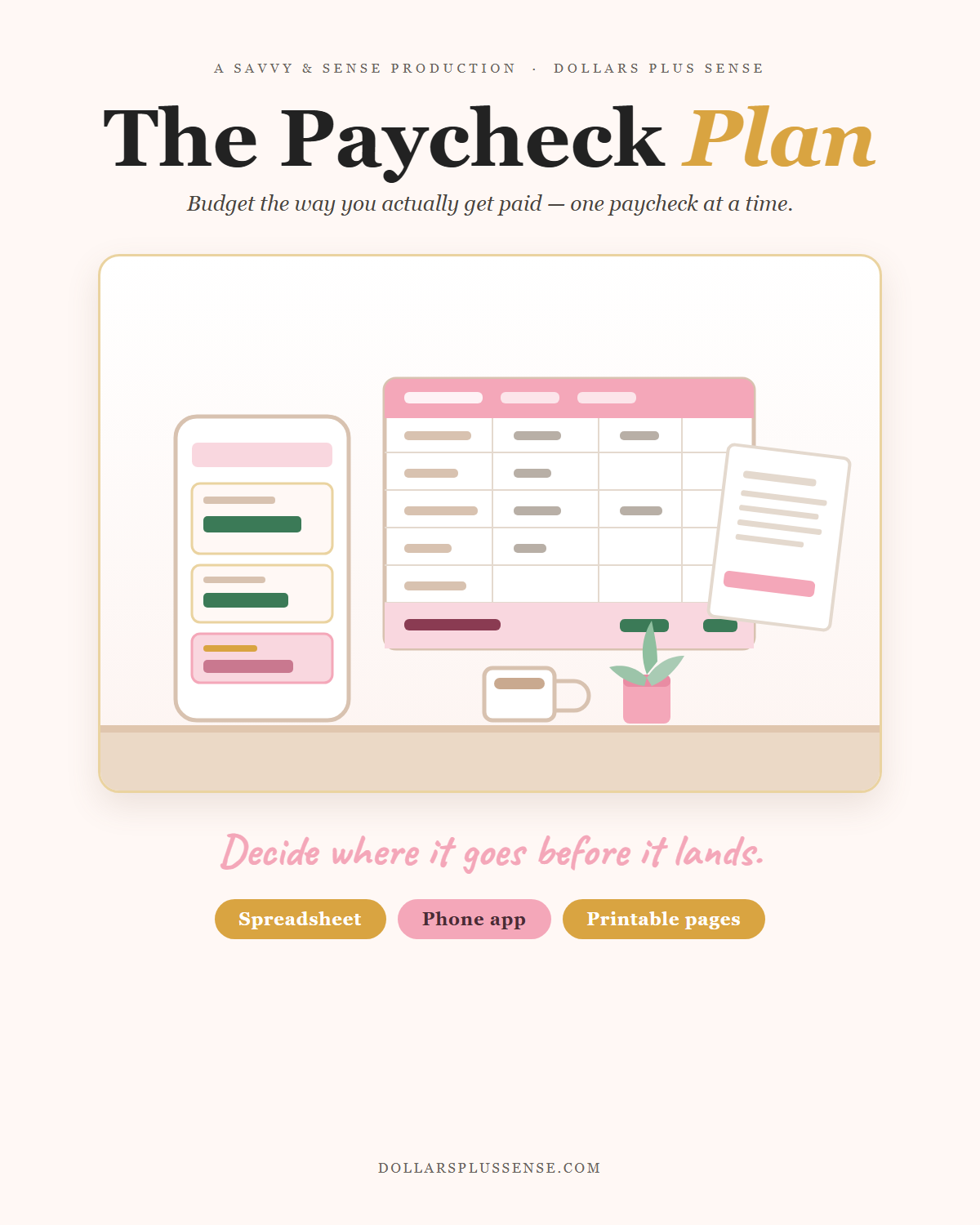
- Pick one format as home and let anything else feed it. This is the step that ends the debate. Your home format is where the plan lives and where you do your monthly budget review. Everything else is a feeder: the phone is where you log, the laptop is where you look. It is why The Paycheck Plan ships as a spreadsheet, a phone app and printable pages in one purchase: log at lunch, review on Sunday, and never buy the same plan twice.
- Give it two months before you judge it. The first month of any format is clumsy; you are learning where things go and finding your real numbers. The second month is the fair test. If you have opened it most weeks by then, you have your answer. If not, you have learned something useful, and switching costs you only the time to move a few numbers over.
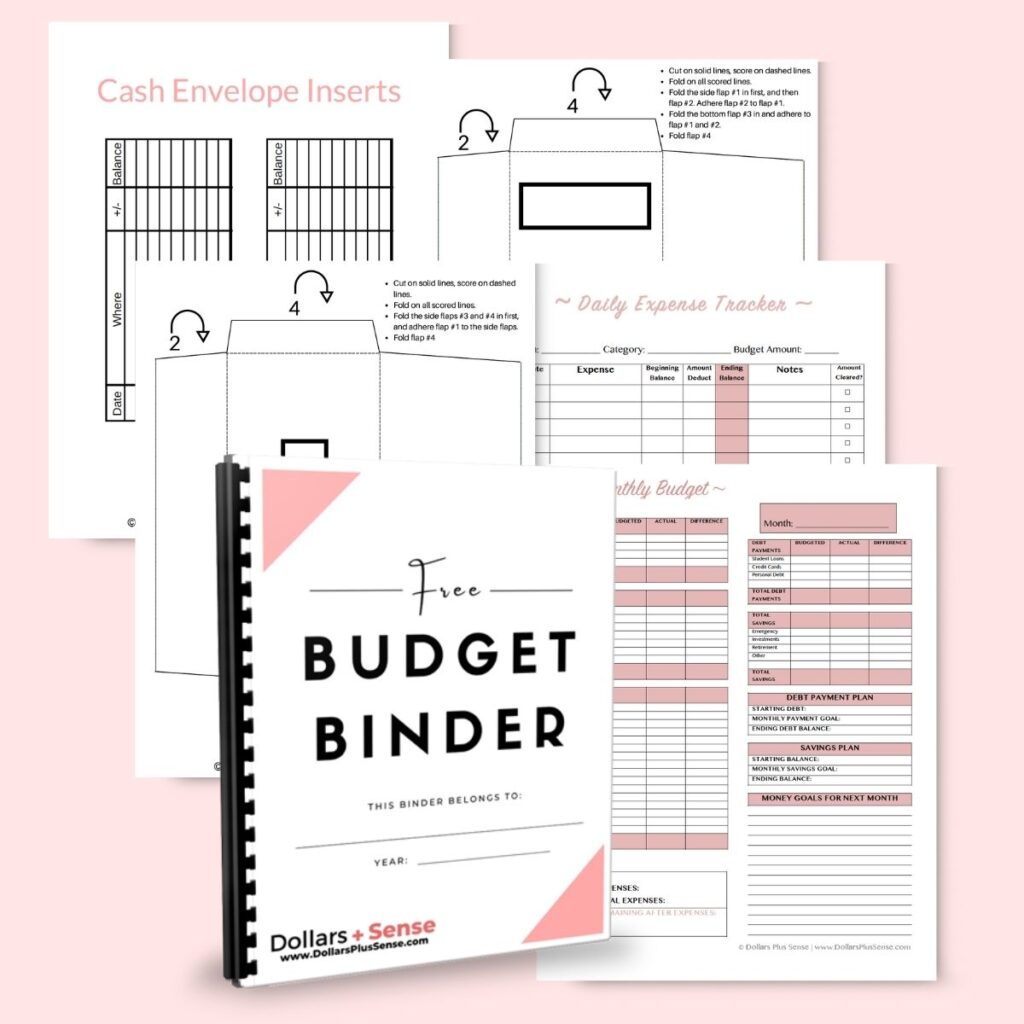
Want to test the paper answer before you spend anything? The free budget binder is a printable monthly budget sheet with planned and actual columns, free with your email address. One month with it and you will know.
Why do Dollars Plus Sense tools come in more than one format at one price?
Because the first time you buy a budgeting tool, you do not yet know which format you will keep. Nobody does. You find out by living with it, and making you pay again when you discover you are a spreadsheet person after all felt wrong to us. So wherever it fits, a tool in this shop ships as a printable PDF, a fillable PDF for a tablet, and an app twin for your phone, all for one price.
The other reason is that your format changes with your season. The year you are at a desk, the spreadsheet is perfect. The year you are on your feet all day, the phone is the only thing you carry. One purchase, and the plan follows you from one season to the next. With the right tool, you do not have to be right the first time.
Which door should you start at?
Once you know your format, the only other question is your situation. That is what the three doors are for: each is a bundle of tools for one stretch of the road.
The Starter Door ($19) is for just starting. Twelve files for the first ninety days of budgeting, as a spreadsheet plus an app, when the goal is simply to know where the money goes and get one month to balance.
The Balancer Door ($29) is for getting a grip. Twelve files for the long middle stretch, budgeting the month and paying down a balance at the same time, as spreadsheets plus binders, including the Ultimate Budget Binder itself.
The Builder Door ($27) is for building real wealth. Nine files for the stretch where there is finally margin, as fillable binders plus an app, built around deciding what that margin is for.
And if you would rather not choose a door at all, The All-Access Pass is every binder, spreadsheet, tracker and money challenge in the shop, in every format we make, for a full year of access at one price. Sense did the math: bought separately, the tools inside it add up to over $220. The Pass page always shows the current price.
Frequently asked questions about budget binders, spreadsheets and apps
Can I mix formats, or do I have to pick one?
Mix them, with one rule: one format is home and the rest are feeders. The home format holds the plan and is where you do the monthly review. An app can log purchases during the day and a printed page can sit on the fridge, as long as the numbers end up in the home format once a week.
Is paper budgeting outdated?
No. Writing a number by hand is slower than typing it, and that slowness is the feature. The page shows the whole month at once and never pings you. If paper is what you will open, paper is the modern choice for you.
Do I need to know Excel to use a budget spreadsheet?
You need to be able to type a number into a cell. That is the whole skill. Our spreadsheets, including the Monthly and Yearly Budget Spreadsheet, open in Google Sheets with the formulas already built, so the totals and the yearly summary fill themselves in. If a formula ever gets overwritten, make a fresh copy from your download and paste your numbers back.
What if I pick one and want to switch later?
Then switch. Your categories and numbers move with you; only the container changes. With a tool that ships in more than one format at one price, the switch is a download you already own.
Which format is best if my income changes every month?
Irregular income needs the yearly view, so you can plan around the low months rather than the average, and a spreadsheet does that most easily. Our guide to irregular income budgeting walks through the method step by step, and it works in any of the three formats once the yearly picture is in place.
Know your format? Start at the door that matches your month.
Each door is a bundle for one stretch of the road, with one page inside that says which file to open first. Pick by situation, not by price.
Or take all of it: The All-Access Pass is every tool in the shop, in every format, for a full year. Single tools are there too: the Ultimate Budget Binder ($12) for paper, the Monthly and Yearly Budget Spreadsheet ($10) for the yearly view, and The Paycheck Plan ($12) for all three formats at once.
Binder, spreadsheet or app: none of them is the grown-up choice and none is the lazy one. The right choice is the one that gets opened in week three, and only you know which that is. Decide in ten minutes, give it two months, and if you want to find out whether paper is your answer first, the free budget binder is one printed page away.
General education, not investment advice.