Time it takes: about 30 minutes once, then ten minutes a month to keep it true. “How do I list all my debts?” sounds like a question with an obvious answer, which is exactly why most people never finish doing it. The card is in one app, the car is in another, the student loan sends paper, and the one from two years ago has gone quiet. This guide walks through building one complete list, one line per debt, and stops there. The payoff order is a different decision, and it only works once this one is done.
Quick answer: how do you list every debt you owe in one place?
Pull your free credit reports, open every statement and account app, and write one line per debt: who you owe, the balance, the rate printed on the statement, the minimum payment and the due date. Total it once, put the due dates on a calendar, and decide where the list lives so it gets updated.
If you want the page already ruled for you, the Debt Worksheet is that one line per debt on a single printable page, with the totals at the bottom and a priority column you can leave blank for now.
Jump Ahead To:
Why does the list come before the plan?
Sense here. Let’s look at the numbers, and I mean that literally, because the number most people are working from is a feeling. “Around eleven thousand, I think.” “Mostly the card.” A feeling cannot be paid off. It cannot be put in order, it cannot be scheduled, and it cannot shrink in a way you can see. You cannot order what you have not counted, so the plan everyone wants to skip to has nothing to stand on until the count exists.
The founder of this shop spent close to thirty years as a company CFO, and no business she ran ever made a decision about a loan without a schedule of every obligation on one page first. Not because the schedule was clever, but because it was the only thing that stopped the conversation from being about the loudest bill. Your kitchen table works the same way. The loudest bill is the one with the angriest email this week. The list is what lets you answer it calmly.
Savvy would like me to add that there is an upside here, and she is right: the list is also where the opportunity shows up. A balance you forgot is a balance you can plan for. A minimum payment you have been overpaying by habit is money with a better job waiting. None of that is visible until it is written down.
What do you need before you start?
Half an hour, a drink, and five sources. Gather them before you write a single line, because the gathering is the part that usually ends the attempt.
- Your credit reports. Each of the three bureaus will give you yours free through the one federally authorized site; the Money Reference Desk links straight to it under Credit & Identity. This is how you catch the account you stopped thinking about.
- Every account app and login. Cards, the car, the bank that holds your overdraft, the store card you opened for the discount.
- Paper statements and email. Search your inbox for “statement,” “balance,” and “payment due.” Student loans and medical bills often live only here.
- Anything owed to a person. A parent, a friend, a sibling who covered the deposit. It counts, and it belongs on the list in plain sight.
- One place to write. A printed page, a spreadsheet, or a notes app for now. Where it lives permanently is a decision for the last step.
How do you list every debt you owe, step by step?
- Gather everything from the five sources above. Do not start writing until the pile is complete. A list that gets added to in week three never feels finished, and a list that never feels finished does not get used.
- Write one line per debt. Five things on each line: who you owe (the exact name on the statement), the balance today, the rate exactly as the statement prints it, the minimum monthly payment, and the day of the month it is due. One debt, one line. Two cards from the same bank are two lines.
- Total it once. Add the balance column and add the minimum-payment column. Write both totals at the bottom and do not touch them again until next month. Two numbers: what you owe, and what it costs you every month just to stand still.
- Put every due date on a calendar. The one you already look at, not a new one. A late payment is almost never about money; it is about a date nobody wrote down.
- Choose where the list lives. Paper on the fridge or inside the binder, a spreadsheet tab, or a page in the planner you already open. The format matters less than the habit of opening it, which is the same rule as choosing a budget format: pick the one you will open in week three.
Step two is where the Debt Worksheet does its job. It is one page, already ruled into those columns, with a priority column on the left that you leave empty today and fill in once the list is complete and the payoff order is decided. Print it or fill it on a tablet; both work.

How do you find the debts you forgot?
Everybody has one. The gym contract that went to a collector, the medical bill that was “being sorted out” by the insurer, the store card with a zero balance you have not closed. Three places find them.
First, your credit reports, pulled from all three bureaus, because not every lender reports to every bureau. Second, a twelve-month scroll back through your bank and card transactions looking for any payment you do not recognize as a current line on your list. Third, your email search, which catches the accounts that only ever wrote to you.
If a report shows an account you do not recognize, or a debt that has gone to collections, the rules for disputing and for what a collector may and may not do are not ours to paraphrase. The Money Reference Desk links to the primary sources for both, under Credit & Identity and Debt Collection, and they are written for exactly this moment. Add the line to the list either way, with a note, so it is counted while you sort out whether it is right.
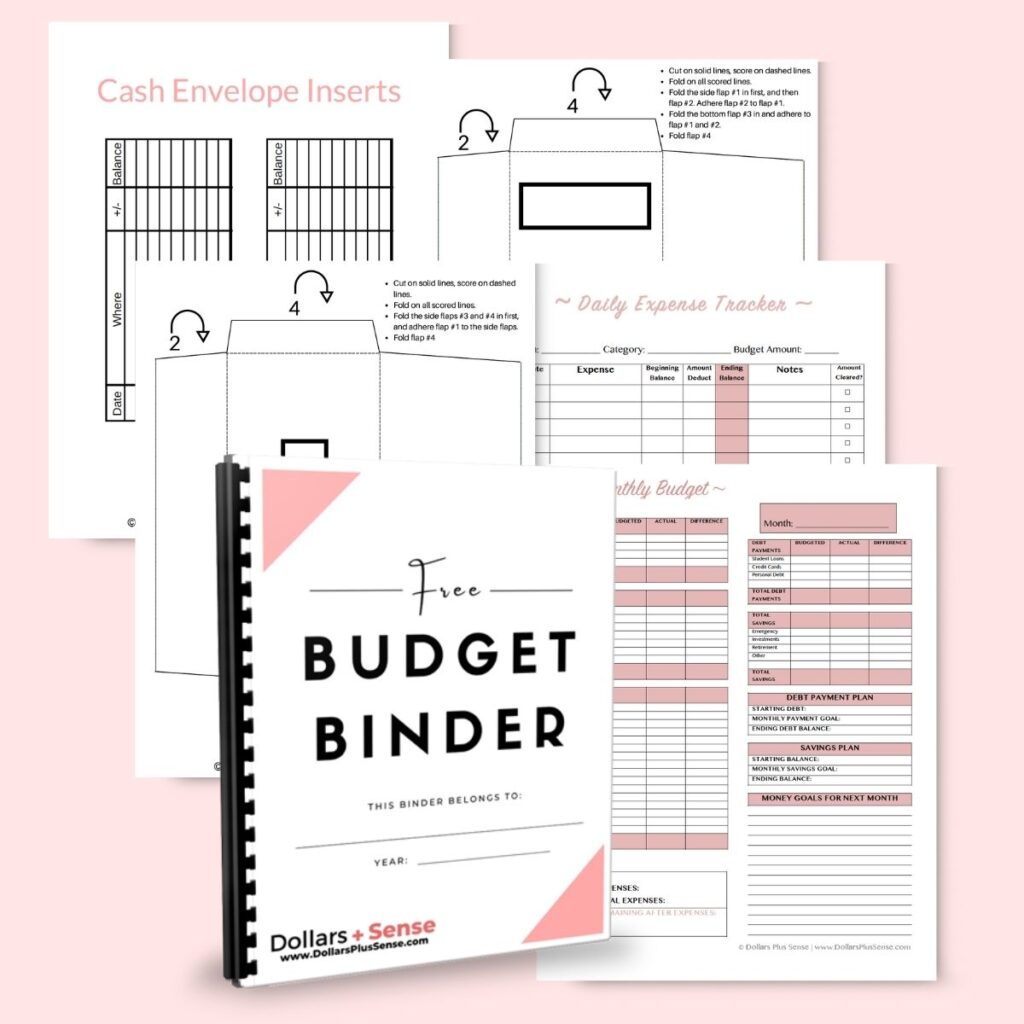
Want the rest of the pages this list sits inside? The free budget binder is a printable starter set: the monthly budget page, the bill tracker and a few of the pages we reach for most. Print it, put the debt list in front, and you have a binder before you have spent anything.
What does it feel like to see the total?
Usually worse than the feeling you had been carrying, for about a day. Then better than it has felt in years. I want to be honest about both halves, because the first half is why people stop at line four.
The total is not a verdict on you. It is a measurement, the same way a scale or a thermometer is a measurement, and a measurement is the one thing you can act on. Before the list, every money decision was made against a fog. After it, every decision is made against a number that can only move in two directions, and you are now the person deciding which. That is the turning point, and it happens on the day the list is complete, not on the day the last balance clears.
Savvy’s line for this moment is the one we both believe: small steps every day lead to big results. The list is the smallest step there is, and it is the one every other step depends on.
Where should the list live: paper or spreadsheet?
Paper if you want the whole picture on one page you can hold, and you are fine updating balances by hand once a month. That is the Debt Worksheet, and for most people building a first list it is the right amount of tool.
A spreadsheet if you want the totals to update themselves and you are ready for the next step, which is turning the list into a payoff schedule. The Debt Payoff Spreadsheet starts with the same five columns, then takes the extra you can put toward debt each month and shows the month each line clears. It is the list, grown up. If you are not sure which you are, start on paper; the spreadsheet takes a paper list in ten minutes.

What happens after the list is done?
A payoff order comes next: deciding which line gets any extra money first while every other line gets its minimum. That is a separate decision with a couple of well-known methods behind it, and it deserves its own sitting. This guide stops at the complete list on purpose, because the order is only a real choice once every line is on the page.
Two things keep the list true in the meantime. The first is the 20-minute monthly budget review: on review day, update every balance from the statements and rewrite the two totals. The second is making sure the minimum payments are sitting inside the budget as fixed costs, next to rent and the phone, the way the sinking fund budget treats annual bills. A debt payment that is not in the budget is a surprise every month, and surprises are what the list was built to end.
Frequently asked questions about listing your debts
How often should I update my debt list?
Once a month, on the same day you review the budget. Update the balance on each line from the latest statement, rewrite the two totals, and leave the rest alone. A list that is touched once a month stays true; a list that is touched daily becomes a mood tracker.
Should I include my mortgage and student loans?
Yes. Every debt goes on the list, including the ones you are not planning to pay off early. The list is a count of what you owe and what it costs each month, not a to-do list. Whether a line gets extra money is the payoff decision, and that comes later.
What if a debt is in collections?
Put it on the list with a note that says “collections” and the collector’s name, so it is counted. Then read the primary-source rules for what a collector may do and how to dispute an account you do not recognize; the Money Reference Desk links to both under Credit & Identity and Debt Collection. We do not paraphrase those rules here because they change and your situation is specific.
Paper or spreadsheet for a debt list?
Paper to build the first list; it keeps the whole picture on one page and takes nothing to learn. A spreadsheet once you want the totals to update themselves and the list to become a payoff schedule. Moving from one to the other takes about ten minutes.
What if I am too anxious to look at the total?
Build the list without adding it up. Write every line, then close the page and come back the next day for the totals. The number is the same whether or not you look at it, and once it is written down it stops growing in your head, which is where it does the most damage.
Ready to write the list? Start with the page, grow into the schedule.
The Debt Worksheet is the one-page list from this guide, printable or fillable. The Debt Payoff Spreadsheet is the same list with the totals, the schedule and the debt-free date worked out for you.
Both sit behind the Getting a grip door, with the rest of the tools for the stretch of road where the list exists and the plan is next.
One list, one line per debt, two totals, every due date on the calendar you already use. Half an hour, once. It is not the plan, and it is not supposed to be. It is the ground the plan stands on, and after today you will have it.
General education, not investment advice.