If you’ve ever received a job offer from a startup, you’ve probably faced one of the trickiest questions in your career: how do you negotiate startup equity?
Equity can be one of the most valuable — or misunderstood — parts of your total compensation package. It’s the piece that could turn long hours into long-term wealth or into nothing at all.

Before we get into the math, valuations, and tax implications, let’s make sure your personal finances are in order. When evaluating any offer, you need a clear picture of your current financial situation — your income, expenses, and savings goals.
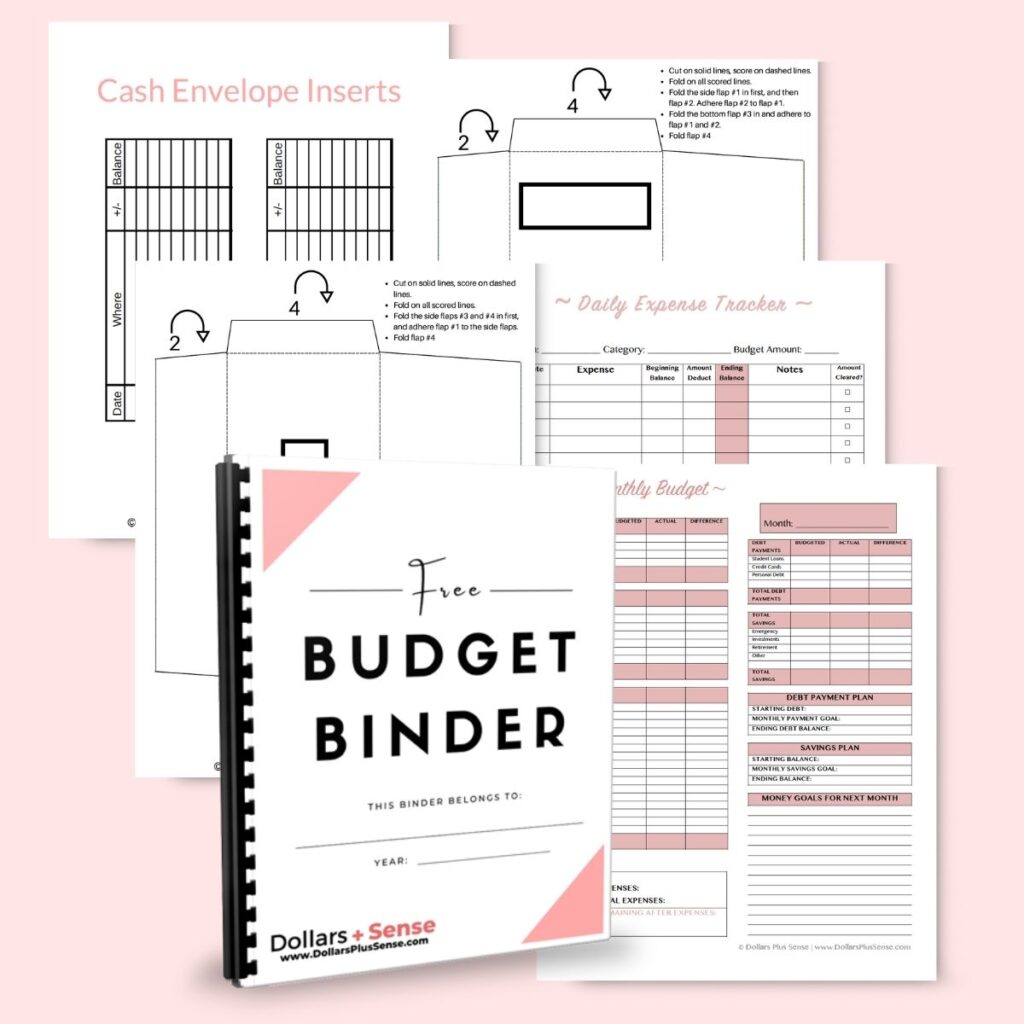
Download my FREE Budget Binder to help you get organized before you start negotiating. It’s the perfect tool to understand your monthly expenses and make informed decisions about your financial future.
Now, let’s walk through how startup equity works — and how to make sure you’re getting a fair deal.
Jump Ahead To:
Understanding Startup Equity Compensation
At most startups, employees receive some form of equity compensation — a way to own part of the company through stock options or restricted stock units (RSUs).
Unlike a salary, equity represents a potential ownership stake in the company’s success. When the company grows, raises funding, or goes public, your shares could become a valuable asset.
There are several types of equity you might see in your offer:
- Common stock – usually granted to employees and early hires.
- Preferred stock – often given to investors or founders, with special rights and privileges.
- Incentive Stock Options (ISOs) – favorable tax treatment for employees, subject to specific IRS rules.
- Non-Qualified Stock Options (NSOs) – more common for contractors or executives, taxed as ordinary income.
Each type has its own tax implications, so it’s essential to understand what you’re being offered before you sign.
How Startup Equity Works

Let’s break down some key terms you’ll see in your offer letter:
- Strike Price (Exercise Price): The price you’ll pay to purchase your shares in the future.
- Fair Market Value (FMV): The current value of the stock, set by the company’s board or valuation.
- Vesting Schedule: The timeline over which you earn your equity. A standard schedule is four years with a one-year cliff (meaning you earn 25% of your shares after one year, then the rest monthly or quarterly).
- Number of Shares: The actual count of shares you’re offered — but what matters more is your percentage ownership of the company.
For example, owning 10,000 shares in a company with 100 million total shares is only 0.01% ownership — not as large as it sounds. Always ask how many shares are outstanding to understand your true stake.
How to Evaluate a Startup Equity Offer

When you receive a startup equity offer, your first instinct might be to focus on the salary. But the equity component could represent a higher total compensation in the long run — if you negotiate wisely.
Here’s what to consider:
1. Understand the Company’s Stage
Equity value depends heavily on the stage of the startup:
- Early-stage startups (Seed, Series A) offer higher upside but more risk.
- Later-stage startups (Series B, C, or pre-IPO) tend to offer smaller equity packages but higher salaries and stability.
Ask about the company’s valuation and recent funding rounds — often led by venture capital firms.
2. Compare Equity to Market Rate
You can benchmark offers using databases like Levels.fyi or Pave to see how much equity people in similar roles receive at startups of the same size.
This helps you know whether you’re getting a competitive offer.
3. Evaluate the Vesting Schedule
If you’re joining as one of the early employees, make sure the vesting period aligns with your career goals. You don’t want to leave before your equity vests — otherwise, you walk away with nothing.
4. Understand Liquidity and Exit Scenarios
Equity is not real money until it becomes liquid — meaning the company is sold or goes public. Ask about:
- The company’s exit strategy.
- Historical funding data.
- Any secondary markets where employees have been able to sell shares.
How to Negotiate Startup Equity

Negotiating equity can feel intimidating, but it’s just another form of compensation — and you deserve clarity.
Here’s the negotiation process broken down into simple steps:
Step 1: Research Before Negotiating
Know your market rate for both salary and equity. Tools like Carta or Glassdoor can help you gauge benchmarks for salary and equity for similar roles at startups.
Step 2: Understand the Terms
Ask for specifics, such as:
- Total number of options and total company shares outstanding.
- Type of equity (ISOs vs. NSOs).
- The exercise price and fair market value.
- The vesting schedule and cliff period.
Step 3: Balance Equity and Cash Compensation
You can often trade a higher salary for more equity, or vice versa. For example, you can say, “If we can’t increase the base salary, could we discuss a higher equity stake to make the offer more competitive?”
Remember, equity is speculative, but cash is guaranteed. Strike a balance that fits your personal financial situation.
Negotiating Startup Salary Like a Pro

While equity can be exciting, most people still rely on their salary to cover day-to-day living expenses, so don’t overlook this part of your offer. Negotiating a startup salary takes a slightly different strategy than negotiating at a large public company, because early-stage startups often have limited cash but can offer more upside through equity or bonuses.
Here’s how to approach your salary negotiation like a pro:
1. Research the Market Rate
Before you talk numbers, do your homework. Look at salary data sets from reliable sources such as Glassdoor or Indeed to find the market rate for your role in your location and company stage.
For example, software engineers in Silicon Valley may earn less cash compensation but more equity grants, while similar roles in smaller cities may offer a higher base salary and lower upside.
Knowing these benchmarks helps you negotiate from a position of confidence — not guesswork.
2. Consider the Company Stage and Financial Situation
Startups evolve quickly, and their ability to pay competitive salaries depends on funding and growth stage.
- Seed or Series A startups may ask employees to take a pay cut in exchange for larger equity packages.
- Series B or C startups often offer salaries closer to market rate with moderate equity.
- Late-stage startups (close to IPO or acquisition) tend to have the best of both worlds — higher salaries and equity with defined fair market value.
Always ask direct questions about funding rounds, cash runway, and headcount growth. A transparent employer should have no problem sharing this information.
3. Balance Cash and Equity for Higher Total Compensation

Think of your offer as a total compensation package, not separate parts. If your base salary is below what you expected, you can negotiate by saying, “I understand the cash constraints of an early-stage startup. Would you be open to a slightly higher equity stake to make the total compensation more aligned with market rates?”
Alternatively, if you value stability, focus on cash compensation and benefits — like health insurance, retirement contributions, or remote work flexibility.
Your goal is to create a balance that fits your personal financial situation and risk tolerance.
4. Ask for a Review After the First Year
Since startups change fast, many new hires negotiate for a pay review after their first year. You can phrase it like this: “I understand early-stage budgets are tight, but could we schedule a salary review after 12 months based on the company’s progress and my performance?”
This keeps the door open for pay increases as the company grows — a win-win scenario that aligns your success with theirs.
5. Don’t Forget About Perks and Non-Cash Benefits
In the startup world, flexibility often makes up for smaller salaries. Ask about:
- Flexible work schedules or remote options.
- Professional development stipends.
- Health and wellness benefits.
- Paid time off or additional personal days.
These perks may not be reflected in your paycheck, but they add real value to your total compensation.
6. Know When to Walk Away
Finally, if the offer doesn’t meet your needs or puts you in a financially risky position, it’s okay to say no. Joining a startup is a long-term investment in both your career and the company’s success — so make sure it’s one that supports your goals.
Negotiating with professionalism and preparation shows that you value your work and understand your worth, qualities every founder or hiring manager respects.
Pro Tip: Once your new salary kicks in, create a plan to manage it wisely. Use my Budget Like a Boss course to learn how to allocate your paycheck, automate savings, and build long-term financial freedom. It’s the perfect companion to your new startup job.
Balancing Cash vs. Equity: What’s the Best Deal?
When negotiating your startup offer, you’ll often face a choice between more salary or more equity. Each option has its own advantages and trade-offs depending on your goals, financial situation, and risk tolerance.
Here’s a simple comparison to help you decide which path makes the most sense for you:
| Scenario | Salary | Equity | Risk Level | Best For | Long-Term Outcome |
|---|---|---|---|---|---|
| A. Higher Salary, Lower Equity | $150,000 | 0.05% ownership | Low risk | Those with immediate financial obligations (e.g., mortgage, family expenses) | Stable income, limited upside if the company succeeds |
| B. Moderate Salary, Moderate Equity | $120,000 | 0.15% ownership | Medium risk | Employees who want both short-term security and long-term opportunity | Balanced mix of steady income and potential wealth |
| C. Lower Salary, Higher Equity | $90,000 | 0.5% ownership | High risk | Early-stage hires who believe in the company’s growth and can handle risk | Potentially high reward if the company succeeds or goes public |
Rule of Thumb:
- If you need cash flow stability, prioritize salary.
- If you believe strongly in the startup’s mission and leadership, lean toward equity.
You can always revisit your balance later — many startups will adjust your package after your first year or following a new funding round.
For example, imagine two employees at the same early-stage startup:
- Employee A took the higher salary and earned steady pay but missed out on equity growth.
- Employee B accepted less pay but received 0.5% equity. When the company was later acquired for $100 million, their stake was worth $500,000 — a life-changing payout.
The lesson? Your financial planning and risk comfort level should drive your choice, not just the numbers on paper
Tax Implications of Startup Equity

Equity compensation can lead to complex tax scenarios. For example:
- Exercising Incentive Stock Options (ISOs) may qualify for capital gains treatment if held long enough.
- Exercising Non-Qualified Stock Options (NSOs) usually results in ordinary income taxation.
- The exercise price vs. fair market value at exercise affects your tax liability.
Consult a financial advisor or tax professional before making decisions — especially if your startup is growing fast or preparing for an IPO.
How Much Equity Should You Ask For?
The right amount of equity you should ask for depends on the company’s success and your role.
Here’s a rule of thumb for early-stage startups:
- Founding engineer: 0.5%–2%
- Senior software engineer: 0.2%–0.5%
- Mid-level employee: 0.05%–0.2%
- Non-technical roles: 0.01%–0.1%
These numbers vary widely — but don’t be afraid to ask for data or specific examples of previous equity offers.
Avoid Common Mistakes in Equity Negotiations

Here are a few common mistakes you should avoid when doing equity negotiations:
- Ignoring the Vesting Schedule — Leaving before the cliff means losing all your shares.
- Not Understanding Tax Consequences — The IRS doesn’t care whether you can sell your shares yet.
- Forgetting to Ask About Dilution — Future funding rounds can reduce your ownership percentage.
- Not Consulting Legal Advice — Equity negotiations involve contracts and legal implications.
Building Wealth Beyond Startup Equity
Even if your equity doesn’t turn into millions, learning to manage your money effectively will always pay off.
Once you accept your offer, use your new salary and potential bonus wisely. My Investing 101 course walks you through the basics of stock market investing, capital gains, and long-term wealth building — so you can make your equity earnings work for you.
You can also use my Net Worth Spreadsheet to track how your startup shares impact your overall portfolio value over time.
Sample Negotiation Scripts: How to Ask for More Equity or Salary

Knowing what to say during an offer discussion can make or break your startup negotiation. Whether you want a higher base salary, a larger equity stake, or both, these examples will help you approach the conversation with clarity and confidence.
Remember: you’re not demanding — you’re negotiating based on market rate, fair market value, and the unique contributions you bring to the company.
Scenario 1: Asking for More Equity
When to use it:
If you believe strongly in the startup’s potential and are open to a slightly lower salary in exchange for greater long-term upside.
Script:
“I’m really excited about the opportunity to join your team and believe in the company’s long-term vision. Based on my research into equity packages at other early-stage startups, I’d love to explore increasing the number of shares or percentage of common stock in my offer. I completely understand the cash constraints at this stage, and I’m open to balancing cash compensation with a stronger equity position to align my success with the company’s growth.”
Why it works:
It shows you’ve done your research, you understand startup dynamics, and you’re thinking like an owner — not just an employee.
Scenario 2: Asking for a Higher Salary
When to use it:
If you need more financial stability or live in a high-cost-of-living area where a lower salary wouldn’t be sustainable.
Script:
“I really appreciate the offer and the generous equity compensation. I’ve reviewed similar roles and found that the market rate for this position typically falls around [insert number or range]. Would you be open to adjusting the base salary slightly — while maintaining the vesting schedule and strike price — to better reflect current compensation levels?”
Why it works:
You’re not rejecting their offer — you’re positioning your request as a market alignment, not a demand.
Scenario 3: Balancing Equity and Salary for Total Compensation

When to use it:
If you want to find a middle ground between cash compensation and equity value.
Script:
“I understand the company is still growing and balancing limited cash flow with long-term incentives. I’d love to find a structure that feels fair to both sides — perhaps a modest increase in salary with a slight adjustment to the equity offer, so the total compensation package reflects both my experience and the company’s stage.”
Why it works:
This keeps negotiations collaborative, showing you want a fair solution that benefits both you and the employer.
Scenario 4: Requesting a Future Equity Review
When to use it:
If the company can’t meet your equity request now, but might after funding or performance milestones.
Script:
“I completely understand the current limits on equity grants. Would you be open to revisiting my equity stake after the next funding round or at my one-year performance review? This would give us both time to evaluate my contributions and the company’s growth before making adjustments.”
Why it works:
You’re showing long-term thinking and flexibility — qualities that every founder and board member values in early hires.
Scenario 5: Clarifying the Value of Your Equity

When to use it:
If you’ve been offered equity but aren’t sure what it’s worth.
Script:
“Thank you for including equity compensation in the offer. Could you help me understand how this translates in terms of fair market value and percentage ownership? For example, how many total shares are outstanding, and how does my number of options fit within that? I want to make sure I fully understand the offer before making a decision.”
Why it works:
It’s polite, professional, and ensures transparency — while helping you avoid one of the most common startup negotiation mistakes: agreeing to equity numbers without understanding their real value.
Bonus Tip: Keep It Collaborative, Not Confrontational
Always frame your negotiation around shared success. You’re not asking for “more,” you’re aligning your compensation with your impact, experience, and long-term commitment to the company’s mission.
You can say something like: “My goal is to ensure the compensation package reflects the value I’ll bring and aligns with both my financial goals and the company’s success.”
That single sentence sets a respectful tone that strengthens your position and makes you sound like a partner, not just an employee.
Pro Tip: Once you finalize your offer, it’s important to manage your new income and potential equity gains wisely. Use my Financial Goals for Financial Freedom course to set clear money milestones, track your wealth growth, and plan for the future — especially if your equity turns into real money one day.
Summary
Negotiating startup equity isn’t just about asking for more — it’s about understanding what you’re getting, the risks involved, and how it fits into your long-term financial goals.
By preparing your finances, doing your research, and asking the right questions, you can turn your startup job offer into a smart investment in your future.
And remember, before you sign anything, review your offer with a financial advisor or legal expert who understands startup compensation and equity negotiation.
Related Articles: