Saving For Different Financial Goals
$19.00
CREATE A SMART SAVINGS PLAN FOR EVERY GOAL!
Tired of feeling scattered, unsure where to put your money, or worried you’ll fall short when it’s time to pay for life’s big moments?
The Saving For Different Financial Goals mini-money workshop is designed to help you learn about the different types of savings accounts and which one will be best suited for your savings needs.
By the end of this workshop, you’ll know exactly what you’re saving for, how much you need, and which type of account is best for each of your goals.
Imagine the confidence that comes from knowing you have a solid plan for the short, mid, and long-term goals.
Tired of feeling scattered, unsure where to put your money, or worried you’ll fall short when it’s time to pay for life’s big moments?
The Saving For Different Financial Goals mini-money workshop is designed to help you learn about the different types of savings accounts and which one will be best suited for your savings needs.
By the end of this workshop, you’ll know exactly what you’re saving for, how much you need, and which type of account is best for each of your goals.
Imagine the confidence that comes from knowing you have a solid plan for the short, mid, and long-term goals.
What You Will Learn:
By the end of this workshop, you will learn:
- The Most Popular Types of Savings Accounts: Understand the differences between high-yield savings accounts, money market accounts, and CDs so you can choose the best option for each goal.
- How Much to Save for Each Goal: Get a clear idea of how much you need to set aside for your short-term, mid-term, and long-term financial goals—and where you should put your money for each goal.
- How to Make a Realistic Action Plan: Build a personalized savings strategy so you always know exactly what to save for next—and how to get there without feeling overwhelmed.
*This is a digital product. Nothing physical will ship.
What You’ll Receive:
Here’s what you’ll get with the Saving For Different Financial Goals mini-money workshop:
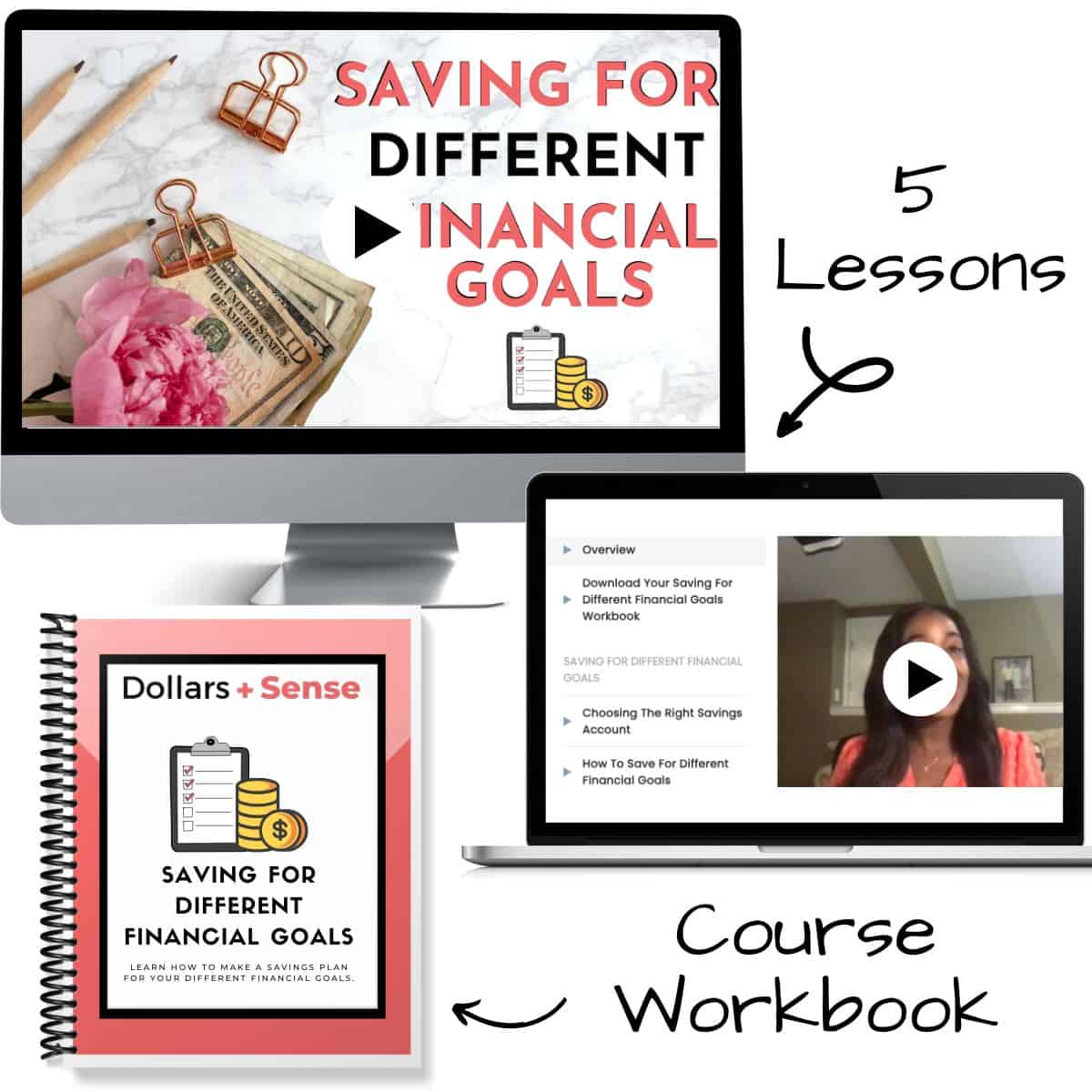
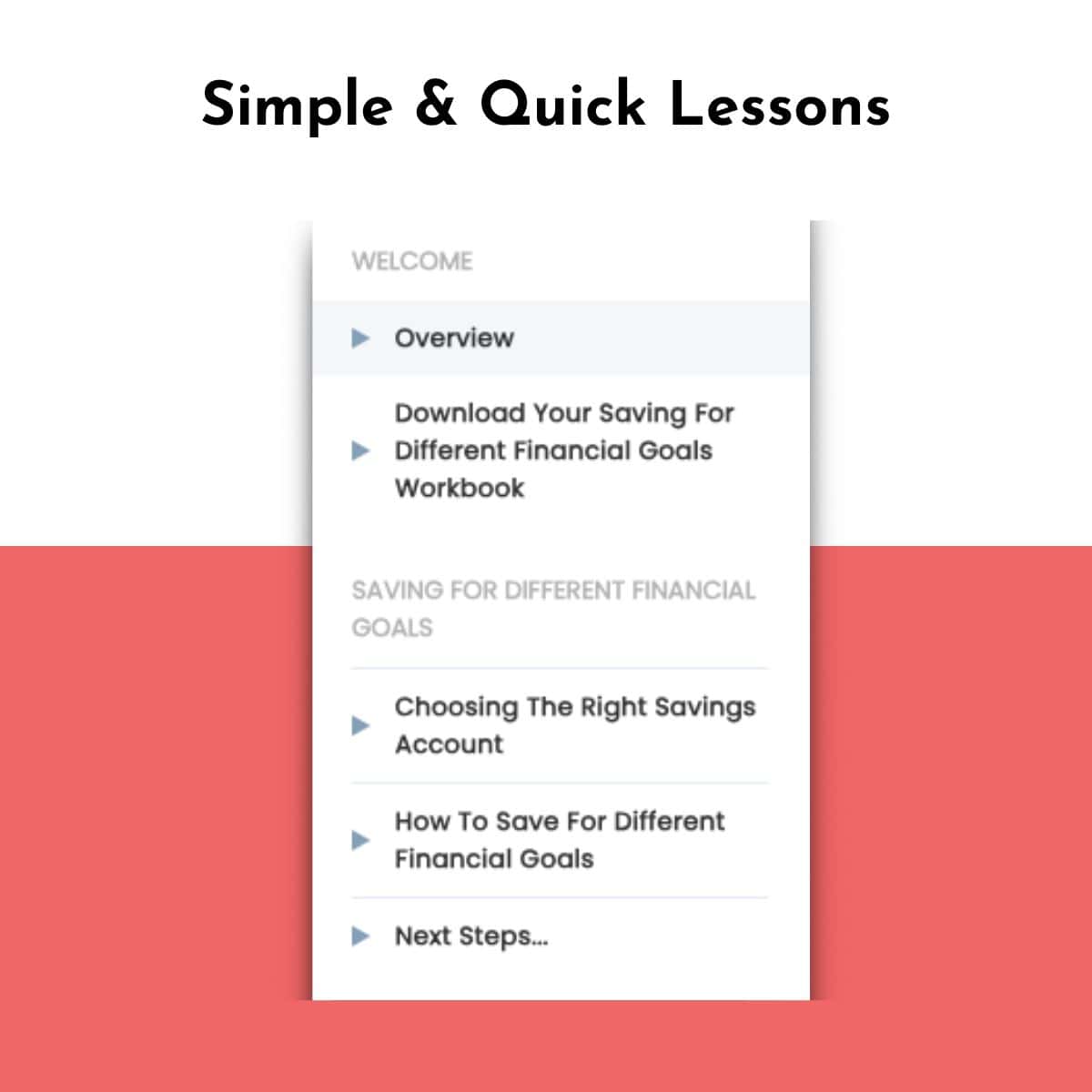
- 5 Engaging Lessons: Step-by-step guidance on picking the right savings accounts, figuring out how much to save, and creating an action plan to reach your goals.
- Full Video Transcripts: Access to written transcripts—perfect for those who prefer to read, want to follow along with the video, or want to easily revisit key points anytime.
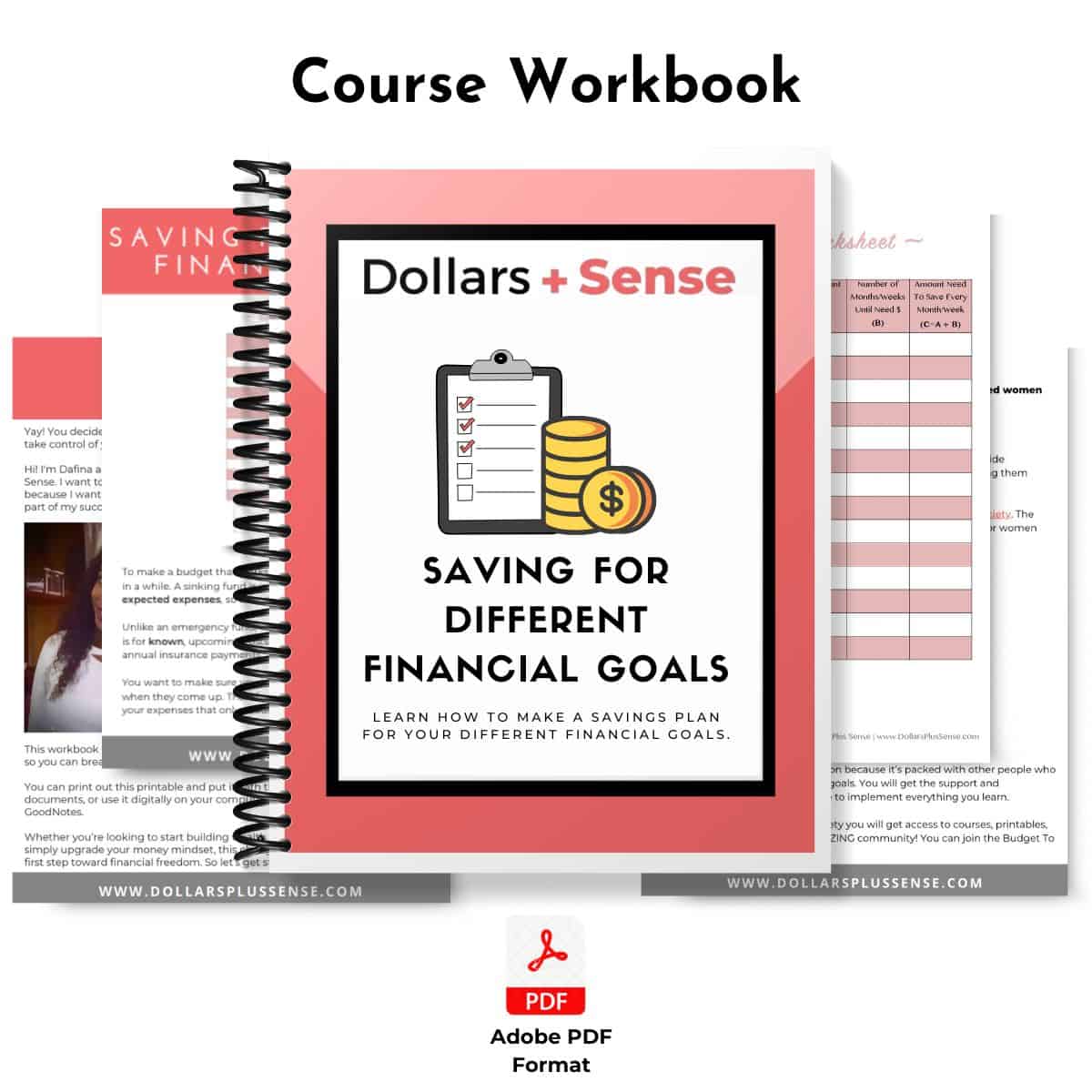
- 9-Page Action Workbook: A downloadable and fillable workbook designed to help you map out your financial goals and decide exactly how to fund each one.
- Lifetime Access: Revisit the course materials whenever you need to adjust your plan as your financial situation changes.
Frequently Asked Questions:
How is this workshop different from the Financial Goals For Financial Freedom course? The Financial Goals For Financial Freedom quick-win course helps you understand exactly where you stand financially, figure out how to prioritize your goals, and create daily action steps to achieve long-term financial freedom. It’s all about building your overall roadmap.
This Saving For Different Financial Goals workshop picks up from there—it’s focused specifically on helping you figure out how much to save for your other goals (like buying a house, investing beyond retirement, or paying for your kids’ education) and exactly where to put your money for each one.
It’s the practical next step once you’ve laid your financial foundation.
I recommend taking the Financial Goals For Financial Freedom quick-win course BEFORE taking the Saving For Different Financial Goals workshop.
Do I need to have an emergency fund before taking this workshop? Yes! Your emergency fund is the most important first step to protect yourself from unexpected expenses. Before you start saving for other goals, make sure you have a solid safety net so emergencies don’t derail your plans.
If you still need to build your emergency fund, check out my Build Your Emergency Fund mini-money workshop—it will show you exactly how to create, grow, and protect this essential financial cushion.
Should I pay off my high-interest debt before taking this workshop? Absolutely! It’s important to pay off high-interest debt before you start saving for other financial goals. That doesn’t mean you have to be completely debt-free—but you should tackle any debt with an interest rate above 8% first.
Paying down high-interest debt frees up your money, reduces financial stress, and helps you reach your other goals much faster.
If you still have high-interest debt hanging over you, start with my Demolish Your Debt quick-win course. It’ll give you a smart, step-by-step plan to become debt-free faster and with less stress.
Should I be saving for retirement before taking this workshop? Yes. You don’t need to be ready for retirement, but you should have at least started putting money toward it.
Saving for your future is too important to put off and is more important than saving for other financial goals.
If you haven’t started yet, my Retirement Planning 101 mini-money workshop will walk you through how to get going—so you can make sure your long-term security is always covered.
This Saving For Different Financial Goals workshop picks up from there—it’s focused specifically on helping you figure out how much to save for your other goals (like buying a house, investing beyond retirement, or paying for your kids’ education) and exactly where to put your money for each one.
It’s the practical next step once you’ve laid your financial foundation.
I recommend taking the Financial Goals For Financial Freedom quick-win course BEFORE taking the Saving For Different Financial Goals workshop.
Do I need to have an emergency fund before taking this workshop? Yes! Your emergency fund is the most important first step to protect yourself from unexpected expenses. Before you start saving for other goals, make sure you have a solid safety net so emergencies don’t derail your plans.
If you still need to build your emergency fund, check out my Build Your Emergency Fund mini-money workshop—it will show you exactly how to create, grow, and protect this essential financial cushion.
Should I pay off my high-interest debt before taking this workshop? Absolutely! It’s important to pay off high-interest debt before you start saving for other financial goals. That doesn’t mean you have to be completely debt-free—but you should tackle any debt with an interest rate above 8% first.
Paying down high-interest debt frees up your money, reduces financial stress, and helps you reach your other goals much faster.
If you still have high-interest debt hanging over you, start with my Demolish Your Debt quick-win course. It’ll give you a smart, step-by-step plan to become debt-free faster and with less stress.
Should I be saving for retirement before taking this workshop? Yes. You don’t need to be ready for retirement, but you should have at least started putting money toward it.
Saving for your future is too important to put off and is more important than saving for other financial goals.
If you haven’t started yet, my Retirement Planning 101 mini-money workshop will walk you through how to get going—so you can make sure your long-term security is always covered.
Access Instructions:
This mini-money workshop is hosted on our course platform, Learn. After checkout, you will receive an email with login instructions.
If you’ve already taken a course on our Learn platform, you can log in HERE.
This is a digital product that will be available instantly online. No shipping is necessary so you can start learning right away!